
Stroke Physiotherapy at Home:
What Recovery Really Looks Like for Your Parent
Home Is Where the Real Rehab Starts
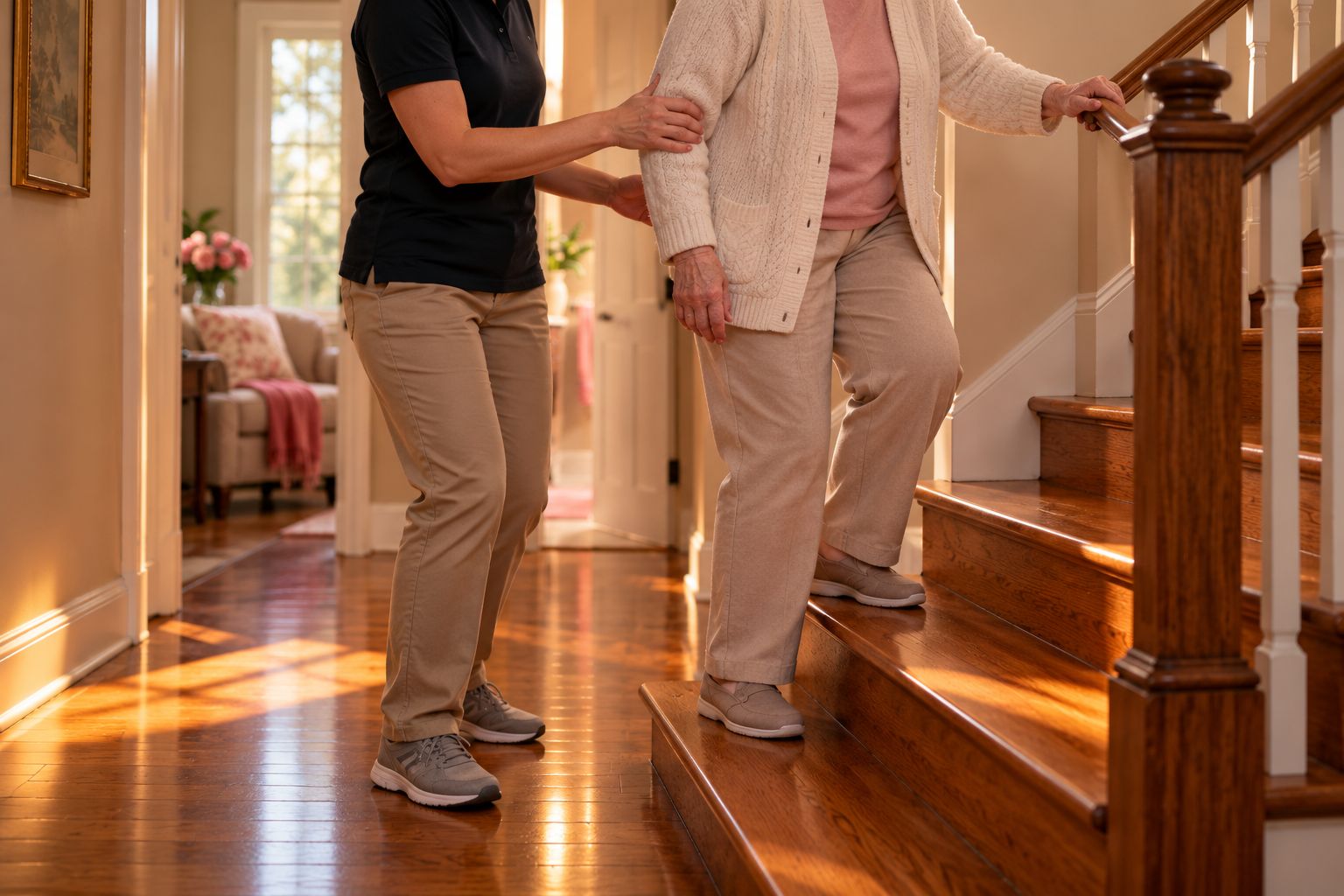
In hospital, your parent's stroke physiotherapy happened in a hallway that was wide, flat and lined with handrails. A physiotherapist walked beside your parent every step of the way, the bed rose and lowered at the push of a button, and the bathroom was ten steps away with a grab bar already on the wall.
Home is different. There is a bath mat that slides, a step down into the family room, a bed that sits lower than the one on the ward, and a bathroom trip at two in the morning with no one in scrubs nearby. The walking your parent practised in hospital is real progress. It just wasn't practised here.
That gap is where many families find themselves in the first weeks after a stroke, and they are far from alone. More than 108,000 strokes happen in Canada every year, and almost one million people are living with the effects of one, according to Heart & Stroke. About half of them need some help with everyday things like dressing, bathing and getting around.
Sources: Heart & Stroke; Canadian Stroke Best Practice Recommendations
The weeks right after coming home are often an important time for recovery, which makes them worth planning for.
What Changes When a Parent Comes Home After a Stroke?
Most families expect the physical side: weakness on one side of the body, a slower walk, an arm or hand that doesn't do what it used to. What catches them off guard is everything around it.
Fatigue after a stroke is not ordinary tiredness. A shower and getting dressed can use up a whole morning's worth of energy. Balance can be unpredictable, steady one hour and shaky the next. And confidence often takes the biggest hit of all. A parent who was walking the hospital hallway with a physiotherapist may refuse to try the stairs at home, not because they can't, but because these stairs feel different.
Families usually end up filling every gap at once. They become the driver, the spotter, the person who remembers the exercises and the one who lies awake worrying about all of it.
How Soon Should Physiotherapy Start After a Stroke?
Sooner than most people think. The Canadian Stroke Best Practice Recommendations advise that, for people with ongoing rehabilitation goals, outpatient or in-home rehabilitation should ideally begin within 48 hours of discharge from an acute hospital, or within 72 hours of discharge from inpatient rehabilitation.
Timing matters because the first few months after a stroke are often an important period for recovery, as the brain works to form new connections and relearn movement. But meaningful progress can continue well beyond that time, and many people keep improving for a year or longer with steady work.
What the First Months After a Stroke Look Like
- In hospitalRehab can begin once your parent is medically stable. Ask what's planned before discharge.
- First 48 hours homeOutpatient or in-home rehab should ideally begin within 48 hours of leaving an acute hospital, or 72 hours after inpatient rehab.
- First few monthsOften an important period for recovery, when regular practice really matters.
- Beyond the first few monthsMeaningful progress can continue. Many people keep improving for a year or longer.
Rehab timing based on the Canadian Stroke Best Practice Recommendations
The handoff from hospital to home doesn't always go smoothly. In 2019/20, CorHealth Ontario reported that about half of stroke survivors in the province went on to inpatient or home-based rehabilitation after their acute hospital stay, a rate that had stayed roughly flat since 2015/16. For some families that means waiting. For others, it means not knowing what to ask for.
If your parent is still in hospital, ask the care team before discharge what rehab is planned and when it starts. Physiotherapy doesn't have to wait until they're home, either. At Get Right Physio, we visit clients in hospitals, retirement residences and long-term care, so the first session at home doesn't have to be the first time your parent meets their physiotherapist. And if the hospital is far from home, as it sometimes is, we can often arrange a handoff to a physiotherapist who serves your parent's own community, across the GTA and surrounding areas, once they're discharged.
If your parent is getting ready to leave hospital, talk to us about hospital or home visits.
Why Does Stroke Rehab Work So Well at Home?
Because home is where the hard part is.
In a clinic, a client practises stepping up onto a platform. At home, they practise the actual step into the front hall, the actual tub, and the actual walk from the bedroom to the kitchen. The skill being trained is the one they will need tomorrow morning.
In-home physiotherapy also removes one of the biggest obstacles after a stroke, which is simply getting there. Arranging a ride, getting in and out of a car, and sitting in a waiting room can drain the energy a client needs for the session itself. At home, all of that energy goes into the work.
And families get to see it. When a physiotherapist shows a daughter the safest way to help her dad stand up from the couch, that lesson gets used forty times before the next visit. It's no surprise that Canada's stroke guidelines list in-home rehabilitation among the recommended options for people with ongoing recovery goals after leaving hospital.
What Does In-Home Stroke Physiotherapy Actually Involve?
The first visit is mostly about understanding where things stand. A physiotherapist looks at how your parent walks, how they get in and out of bed and chairs, how steady they are standing and turning, and how much strength and control has returned on the weaker side. Just as important, they ask what your parent wants to get back to.
That answer shapes everything. For one person it's making it to the front porch without a walker. For another it's cooking their own breakfast again, or getting in and out of the car for Sunday dinner at their daughter's house.
From there, stroke physiotherapy sessions usually build around:
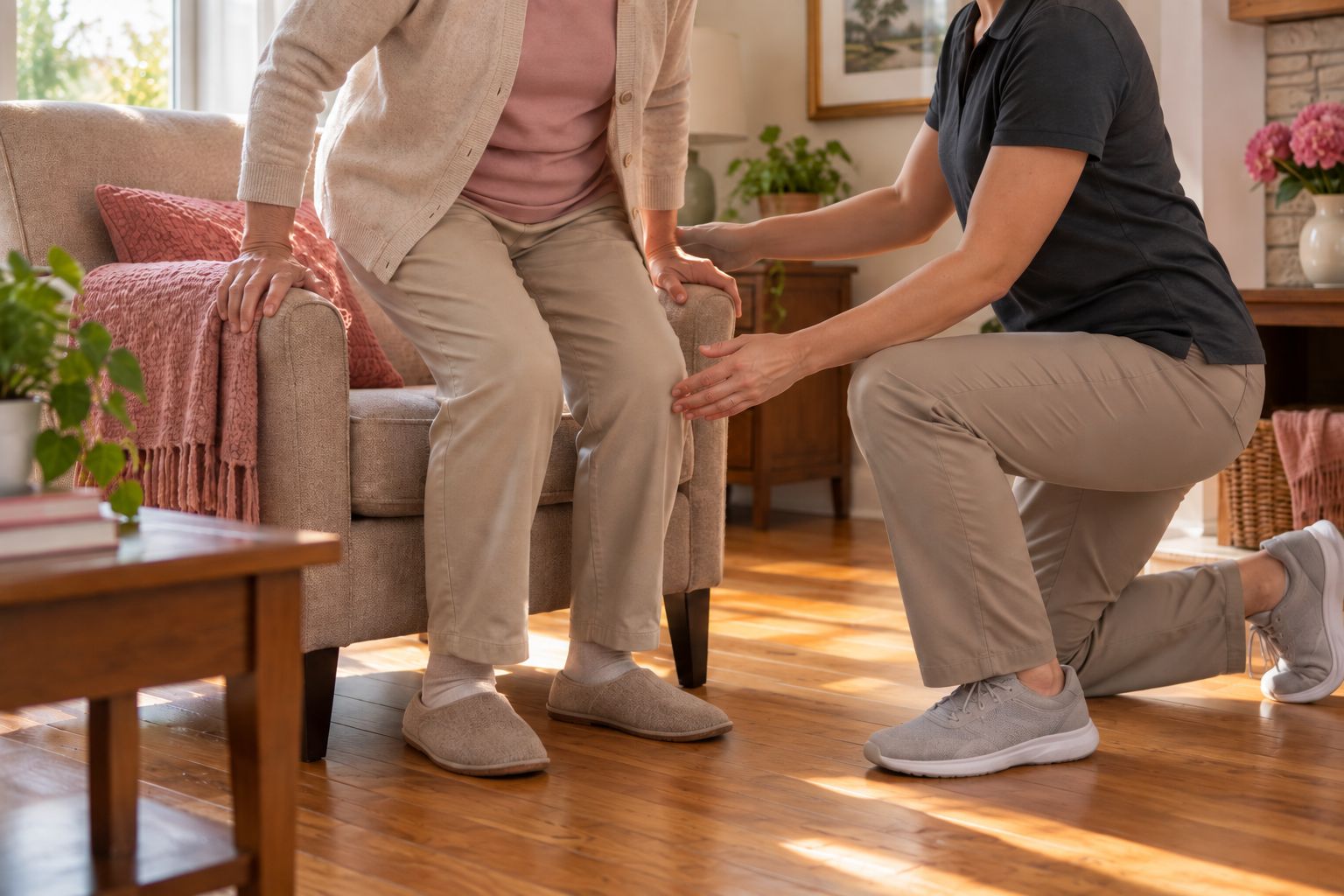
- Standing up and sitting down safely from different heights
- Balance work, including shifting weight onto the weaker leg
- Walking practice, with or without an aid, inside and outside the home
- Stairs, when the time is right
- Arm and hand exercises to rebuild control for everyday tasks
- A short home program for the days between visits
How often visits happen depends on your parent's stage of recovery, their energy, their goals and the rest of their care plan. Some clients do well with one session a week. Others need several, and a few need nearly daily support early on. Most land somewhere in between, and the plan changes as they get stronger.
No two strokes are the same, so the physiotherapist should fit the person. Our team includes physiotherapists with specific neurological rehabilitation training, and many stroke clients are also well supported by other experienced physiotherapists on the team. We look at how complex your parent's needs are and what they're working toward, then match them with the right person.
“My physiotherapist Sakshir was amazing, understood my stroke conditions, worked with me over the months. ... Happy to report I'm back to my old self.”
Stroke recovery often involves more than movement. Speech, swallowing, memory and daily tasks like dressing are usually the work of speech-language pathologists and occupational therapists. With your parent's consent, our physiotherapists can coordinate with those professionals and anyone else involved in their recovery, so everyone is working toward the same goals.
What Can Families Do Between Visits?
Quite a lot, and most of it is small.
Encourage independence, within the safety guidelines the rehab team gives you. It's natural to want to help with every button and every step, and using the weaker side is part of how it gets stronger. But some activities need supervision or hands-on help, especially early on. Ask the physiotherapist which ones your parent can safely do alone and which need someone right there.
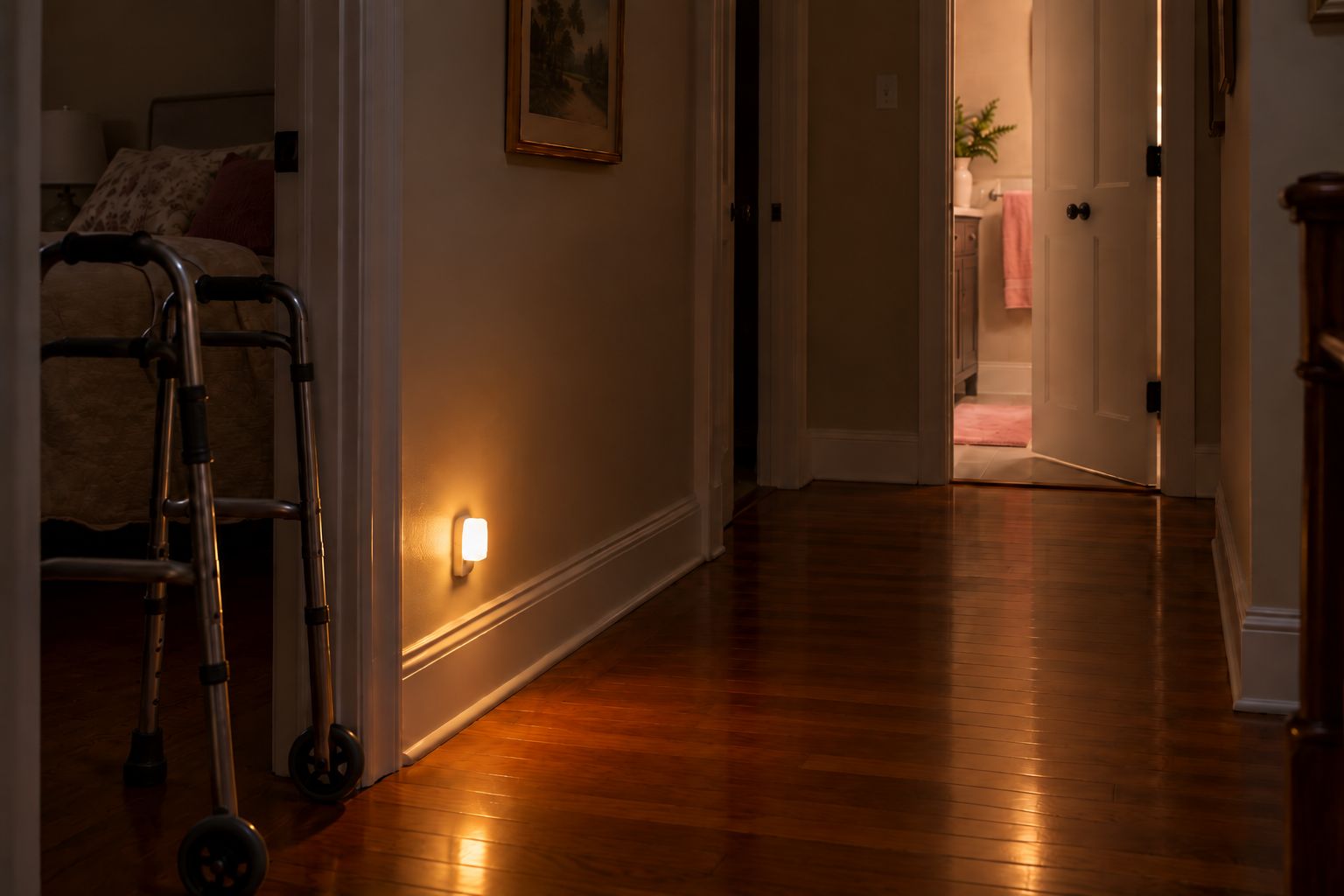
Clear the path before the first night home. Loose rugs, cords and clutter between the bed and the bathroom are worth moving early, and small changes like a nightlight make a real difference. Our guide to setting up your parent's home for safe physiotherapy walks through the rest.
Plan around fatigue. Exercises tend to go better earlier in the day, before appointments and visitors use up the energy.
And notice the small wins out loud. Standing up without pushing off the armrest. Reaching for the kettle with the weaker hand. Recovery after a stroke is made of changes that are easy to miss unless someone is paying attention.

The Hallway Was Only Practice
The hospital hallway was always a rehearsal. The real test was waiting at home, with the bath mat, the step into the family room, and the bed that sits a little too low.
Recovery after a stroke takes time, and it rarely moves in a straight line. But with the right support, in the right place, started early, many people can continue making meaningful progress long after the discharge papers are signed. Bringing physiotherapy home is one of the most practical ways to support your parent's mobility, recovery and greater independence in the place they want to be.
Can physiotherapy for a stroke be done at home?
Yes. Walking, balance, stairs, getting in and out of chairs and bed, and arm and hand work can all be done at home, using your parent's own furniture, hallways and stairs. Canada's stroke best practice guidelines include in-home rehabilitation as a recommended option after leaving hospital.
Do you offer in-home stroke physiotherapy in my area?
We provide in-home physiotherapy across the GTA and surrounding areas, including Toronto, Mississauga, North York, Scarborough, Brampton, Markham, Oakville and Hamilton. Call 647-370-5162 to check availability in your parent's neighbourhood.
Do I need a doctor's referral for in-home physiotherapy?
No. In Ontario, you can book a registered physiotherapist directly without a doctor's referral. Some extended health plans do ask for one before they'll reimburse physiotherapy, so it's worth checking your parent's plan first.
Is in-home physiotherapy covered by insurance?
Many extended health benefit plans cover physiotherapy from a registered physiotherapist, usually up to a yearly limit. Check your parent's plan for their coverage amount and any referral requirements.
Can someone fully recover from a stroke?
Some people do, especially after a smaller stroke. Others live with lasting changes, like weakness on one side or tiring more easily. Either way, many people keep regaining strength, balance and independence with ongoing rehab, and that progress can continue well past the first year.